

Poppi, one of the first members to Italy’s club of “beautiful villages”, is the top of Tuscan charm mixed with historical significance and culinary delights. The tales of its past echo through the narrow cobblestone streets, distinguished castle walls, and the picturesque countryside. It has withstood the test of time, protected by the Tosco-Romangolo mountains and national park on the northeast, Pratomago on the west, and Arezzo to the south.
For the intrepid traveler, Italy’s allure often resides not in the grandeur of its capital or the bustle of its metropolises but in the hidden treasures that await those willing to venture beyond the beaten path. In this blog post, we’ll take you on a voyage to the exquisite town of Poppi and its surroundings, offering a look at its landmarks, local culture, and the authentic flavors on the table.
The Enchanting Setting of Poppi
Imagine the green valley of the Tuscan Apennine mountains, cloaked in majestic forests and populated with picturesque hamlets. That is Casentino and that is where you will find Poppi.
Poppi is set in the tranquil Casentino Valley, the approach to this hilltop village offers not just a promise of grandeur but an assurance that something truly special is about to unfold.
Accessible from the south via Arezzo (with easy train and autostrada access), or through the curvey Consuma Pass from the north, Poppi stands in an enviable location, with the famed monasteries of Camadoli and La Verna nearby, and within a stone’s throw of the Parco Nazionale delle Foreste Casentinesi, Monte Falterona e Campigna—a sanctuary of nature and history.
Peeling Back the History
Once a prehistoric lake, the valley later took form as bustling Etruscan settlements stationed along the mountain crests, an ideal vantage point for defense leaving several reminders behind that can be visited at the archeological museum. Even the marches of the legendary Carthaginian general, Hannibal, who led his famed elephants through these very paths, are preserved with artifacts from the “Lago dei Idoli”.
The tale of Poppi is inextricably linked with the powerful Guidi counts, who reigned supreme in the vale from the 12th to the 15th century. Their power was such that even the noble families of Florence quaked at the thought that they would marry into leading families and overturn the political balance, thus explaining why they put laws into effect that would force the Guidis to petition permission before joining families in wedded bliss.
The Guidi ancestors built the valley, influencing not only the small towns that lined the Arno river but also the palaces and castles, creating robust fortifications that stand to this day as magnificent testaments to their sovereign might.
The Arno River, a vital artery of trade during ancient times, facilitated commerce, with Poppi serving as a crucial node for the transport of timber and wool to the markets of Florence providing the raw material for the cathedral and the Duomo of Brunelleschi.
Landmarks and Legends
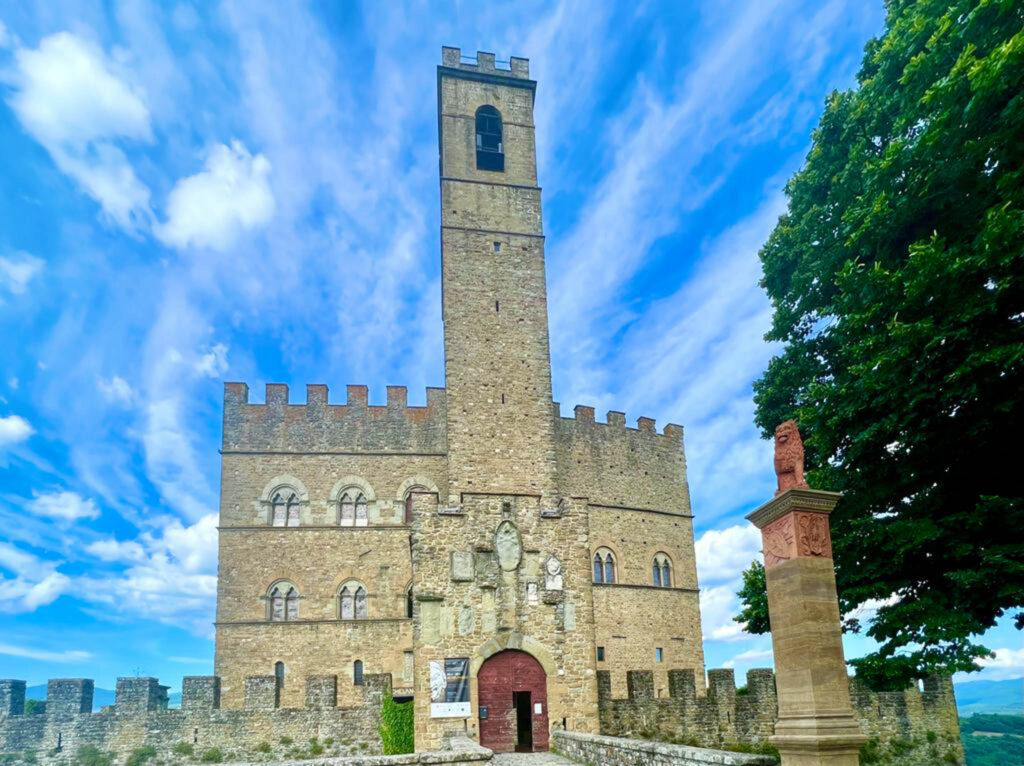
At the heart of Poppi, stands the famed Castello dei Conti Guidi as a timeless sentinel, a symbol of medieval grandeur and the village’s historical legacy. The castle’s brooding facade and sturdy battlements immediately transport visitors to a bygone era.
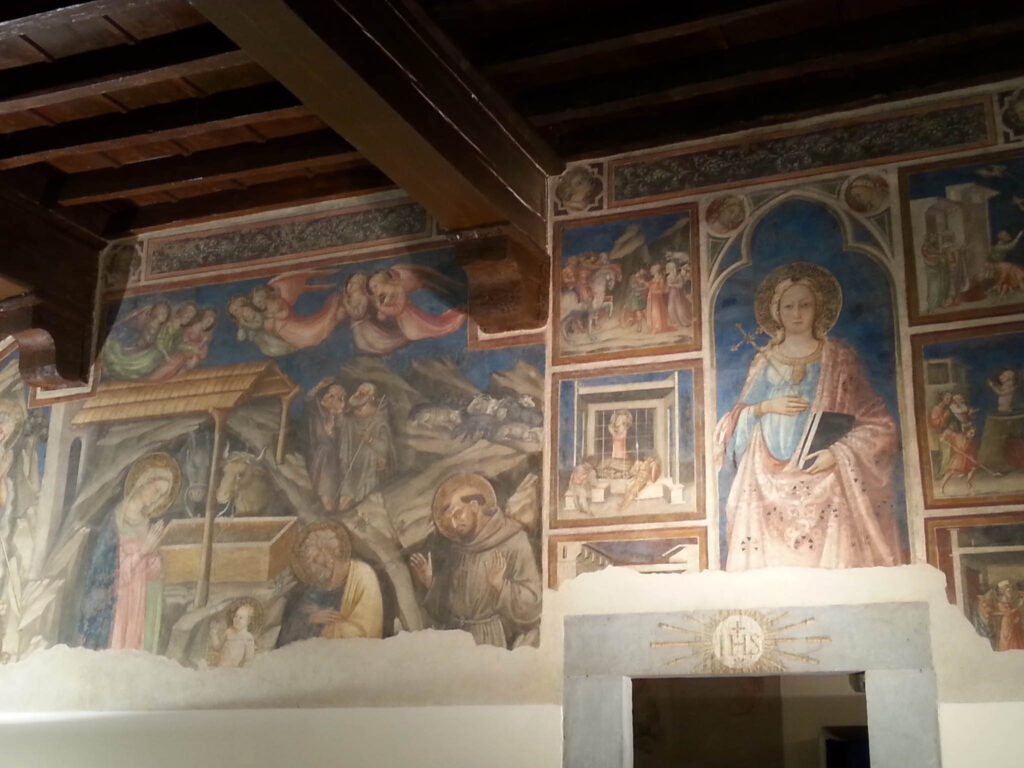
Upon entry, prepare to be mesmerized by frescoed halls, labyrinthine corridors, and the family stems that line these ancient walls. Ascend to the “Torre della Battaglia” for panoramic views of the Casentino valley, a sight that inspired even the Florentine poet, Dante Alighieri.
The Giuga Tower, more commonly known as the “Torre di Diavolo”—the Devil’s Tower—casts an imposing shadow even today with its legend of ghosts and murder. There is a daunting legend about Matelda — but we suggest you search it out on your own while you sip a coffee at one of the local cafes. All we are going to say is gentleman, be aware of beautiful women with a ghostly appearance on moonlight nights…
A focal point as you enter through one of the five stone portals to Poppi is The Madonna del Morbo Church, a graceful monument of gratitude. It recounts the town’s resilience in the face of plagues in 1530 and 1631 and still maintains an important role in the town’s life. The abbey church of San Fedele, with its harmonious blend of architectural styles, houses the soul of the community. The hallowed stone walls will refresh you in the summer and … freeze you in the winter. But it is definitely worth a visit inside, especially a visit to the crypt and the remains of Saint Fedele, the Roman martyr for whom the church is named. We suggest that you walk the external perimeter of the abbey keeping an eye out for large blocks in the fortifying wall which were placed there by Etruscan hands – thousands of years ago.
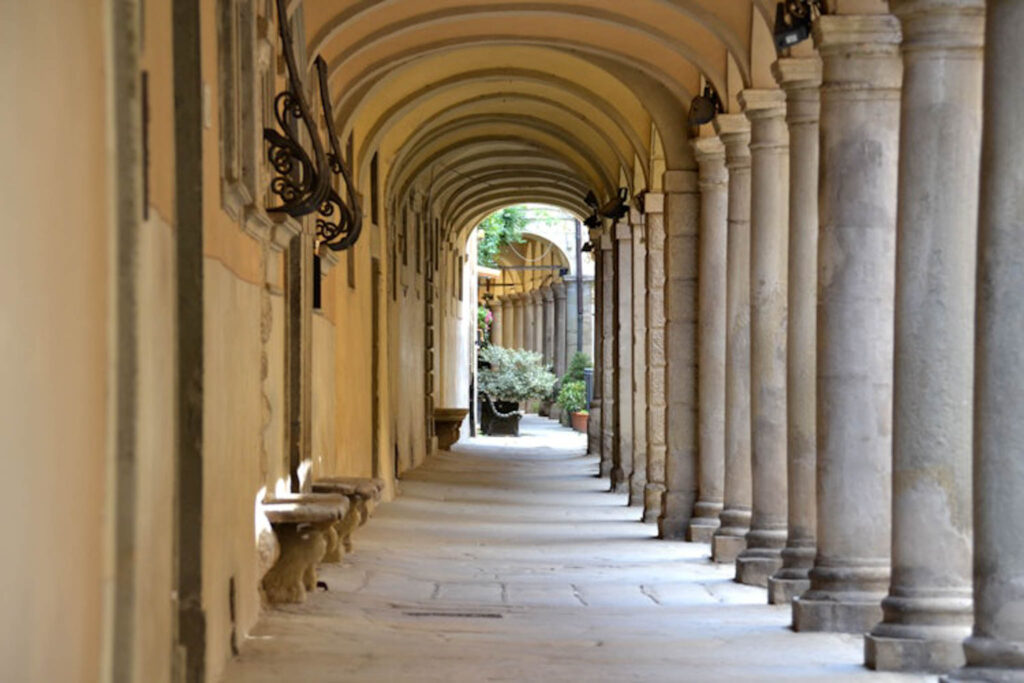
The loggia that leads from the church of the Morbo to the abbey, holds a few surprises, for example not all of those columns are solid rock! A few actually have pipes in them that redirect excess rainwater to basins that hold the reserves. See if you can guess which are hollow and which are not… pro-tip, knocking on the stone will only scrape your knuckles.
In our opinion, the true beauty of this town is just the lazy, quiet atmosphere. We encourage you to settle at the outdoor cafe resting (literally) in the shade of the castle and sip a Spritz, or fruit juice, or just water (from the La Verna springs nearby) and relax. This could very well be the highlight of your vacation.
Exploring the Environs
Poppi is not a static tourist stop but rather a dynamic narrative, and an important actor in the area’s natural beauty. Once you have fully explored Poppi, you will want to add one or more of these stops to your itinerary..
The Casentino Valley boasts of a fine collection of pieves — Romanesque parish churches built in the early 1000s — where the Lombardic influences sculpted the stone art within. One of the more popular to visit is Romena. Park the car, and walk all around the external walls where you will find mullioned windows, columns of the apse, and a lavender garden. Then enter from the stone archway to admire the column capitals with their distinct carvings from the Bible and of ferocious beasts. Don’t forget to descend into the crypt where you can still see remains of the pagan temples from the Roman era.
There is a story to be told from the ramparts of every castle in Casentino – which numbered so many at one time, that it was said the Guidi family could send a message by signaling from castle to castle, reaching the border of France in less than 8 hours! Legend? We will never know. You can visit the tower castle of Porrena and its garden, the partially restructured remains of Romena, and of course, that of Poppi which is extremely well preserved. Other castles have left an imprint on the land, but many have been buried with time.
Definitely not to be missed is the Hermitage and Pharmacy of Camaldoli, from the year 1012, with its profound connection to the national park, revealing the delicate symbiosis between man and monk, medicine, and the mystique of the woodland. La Verna, a monetary for St. Francis monks, played a large part in the economic prosperity of the valley since the late 1200s. Both places offer a place for a mystical retreat and lots of space for hiking and exploration.
And your last stop should be to the south. Though Poppi’s history is more strongly tied to Florence, the valley actually leaned more on the ancient walls of Arezzo, bearing witness to Etruscan and Roman supremacy, medieval tower homes and churches, Medici fortresses and even signs of Giorgio Vasari’s artistic and architectural prowess in the main square.
Reading the menu Casentino
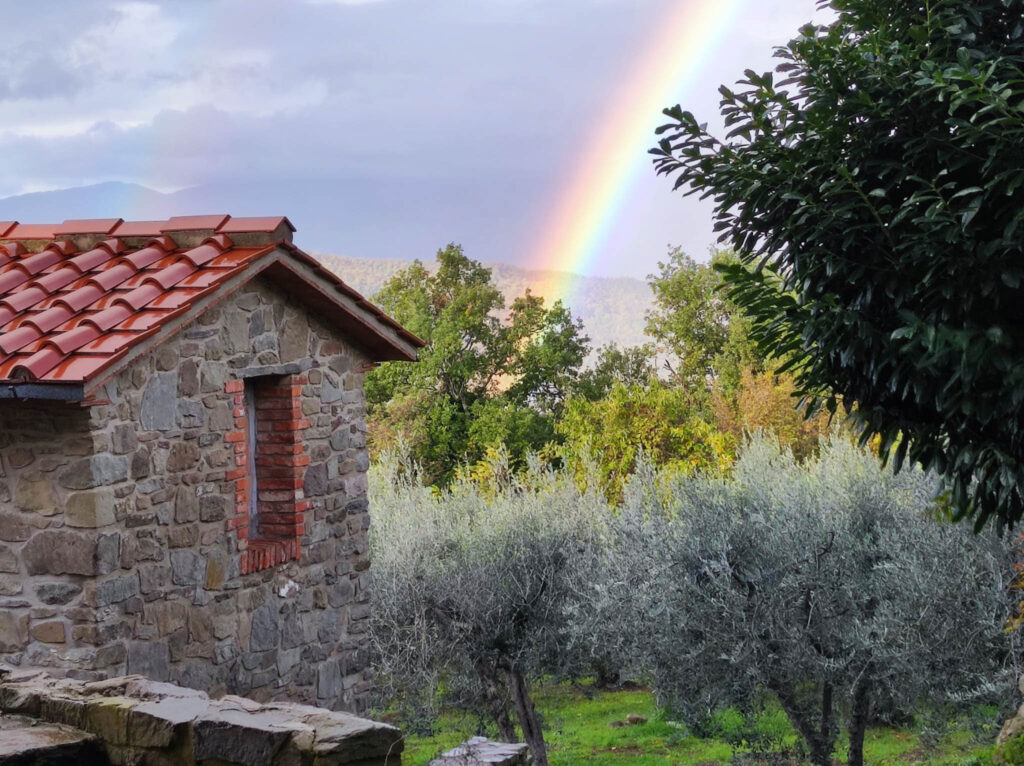
Let’s get down to the good stuff, the menu, which extends a hearty invitation to savor the land’s bounty and traditions. A super-plus, the menu in Casentino promises lots of alternatives for varied food preferences, especially vegetarians, gluten-free pizza ovens, and even a few gourmet stops.
Tortelli di Patate, a square pasta stuffed with potatoes (and a secret combination of spices). It is best served with either the local ragù, a meaty tomato sauce, or sauteed in butter and sage.
Prosciutto Pratomagno, though not made in Poppi, it definitely embodies the traditions of the valley. It hales from one of the mounts that lends its protection to the valley, Pratomagno. It can be found in any of the local supermarkets.
The prosciutto together with pecorino cheese, in all of its flavors, is fresh and local. Ranging from the softy, creamy Marzolino to the hard-aged pecorino that was often a substitute for parmesan cheese on a poor man’s table. These cheeses are the perfect start to a picnic lunch in the national park.
Areas like Casentino excel in showcasing local flavors with the many and varied recipes of the “cucina povera”. You should look for some of these dishes on the menu: Tagliatelle with wild boar or Porcini mushroom sauce, Acquacotta (which literally means cooked water), a combination of local bread, spices, vegetables, and cheeses, and the ever-present selection of roasted or grilled meats (and trout).
Wine is a fairly new chapter in the story of Casentino. Well, that is not exactly true, the locals have been making wine for themselves for hundreds of years but, in the last 10 years, Casentino has given birth to a few vineyards that merit a visit: Cantina Fregan, Azienda Agricola Ornina, and Azienda Vinicola Pergentina. We strongly suggest, making appointments and enjoying these fledgling wineries and views. They are small, personal, and varied, offering bubbly wines to deep earthy reds.
And for those with a hankering for hops, the microbreweries of the valley include Birrificio Agricolo La Campana d’Oro, Birrificio Agricolo Fatucchio, and Bifrons. They stand ready to quench your thirst with artisanal brews using local ingredients such as honey, potatoes and chestnuts and quick savory snacks.
In Conclusion: a small town that promises big satisfaction
Poppi and the Casentino Valley—these are not mere tourist stops; they are destinations composed of time, tradition, and toil, inviting the wanderer to partake in the richness of their essence.
For the traveler seeking to peel back the layers of history, culture, and labors of love that define a town and its people, Poppi and the Casentino Valley are veritable treasure troves waiting to be explored. From the opulent hilltops to the pine and beech trees of the ancient forest, from castle ramparts to the quaint taverns, every nook and cranny offers an opportunity to experience Italy.


